Uncategorized
Ultrasonic Oil Tank Gauges vs Radar Gauges: Which Is Better?
Magnus HAWKi vs Traditional Ultrasonic Oil Tank Gauges
If you’re comparing an ultrasonic oil tank gauge with a radar oil tank gauge, you’re comparing two different measurement methods. Both aim to show oil level, but the technology can affect how stable the reading is and what kind of information you can reliably build on top of it.
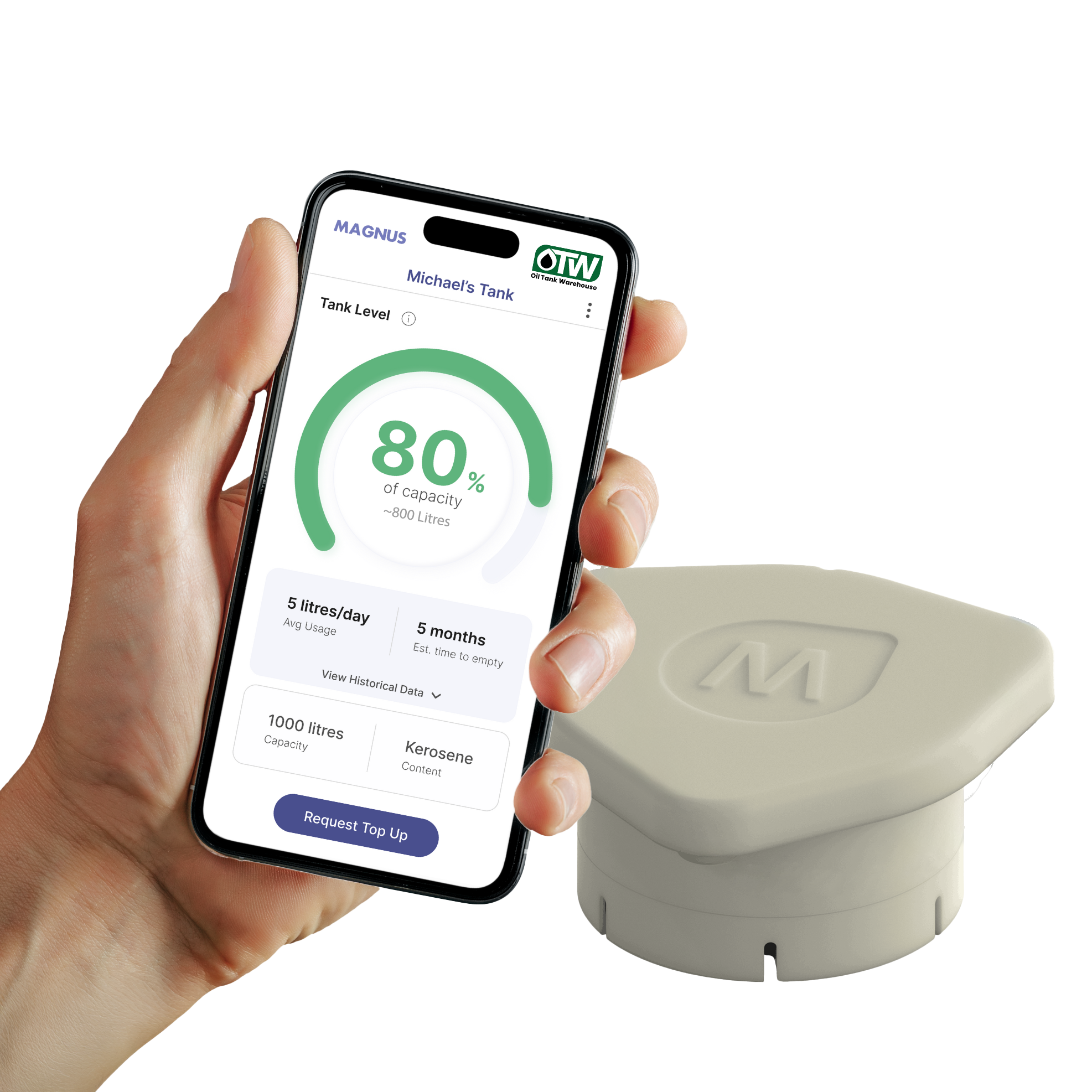
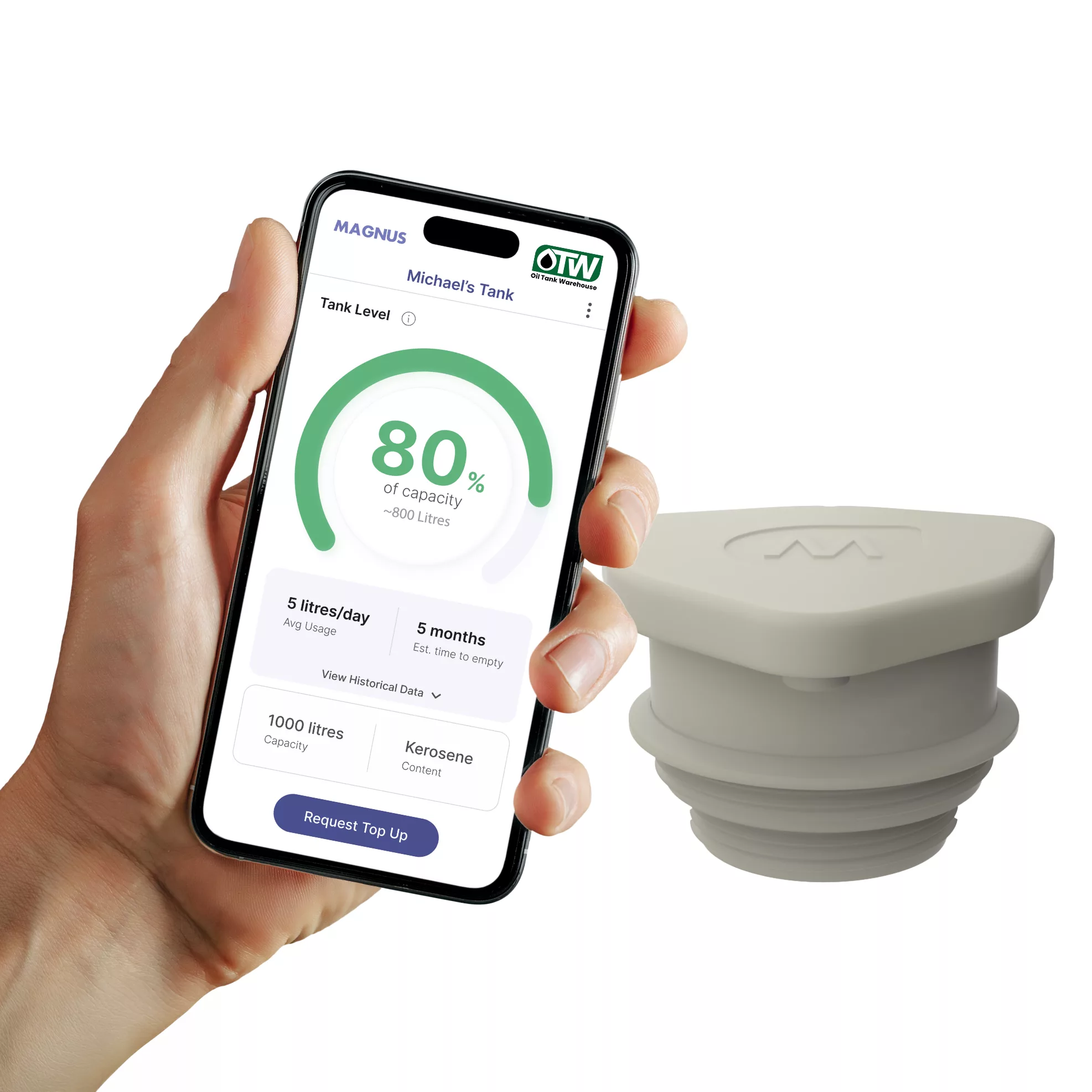
The Magnus HAWKi is a smart oil tank monitor that uses precision radar sensing (around ±5mm accuracy), designed for reliable level measurement and app features like usage history, days-to-empty, alerts, and sharing access with others.
Download the Magnus HAWKi Brochure (PDF)
Quick overview (radar vs ultrasonic)
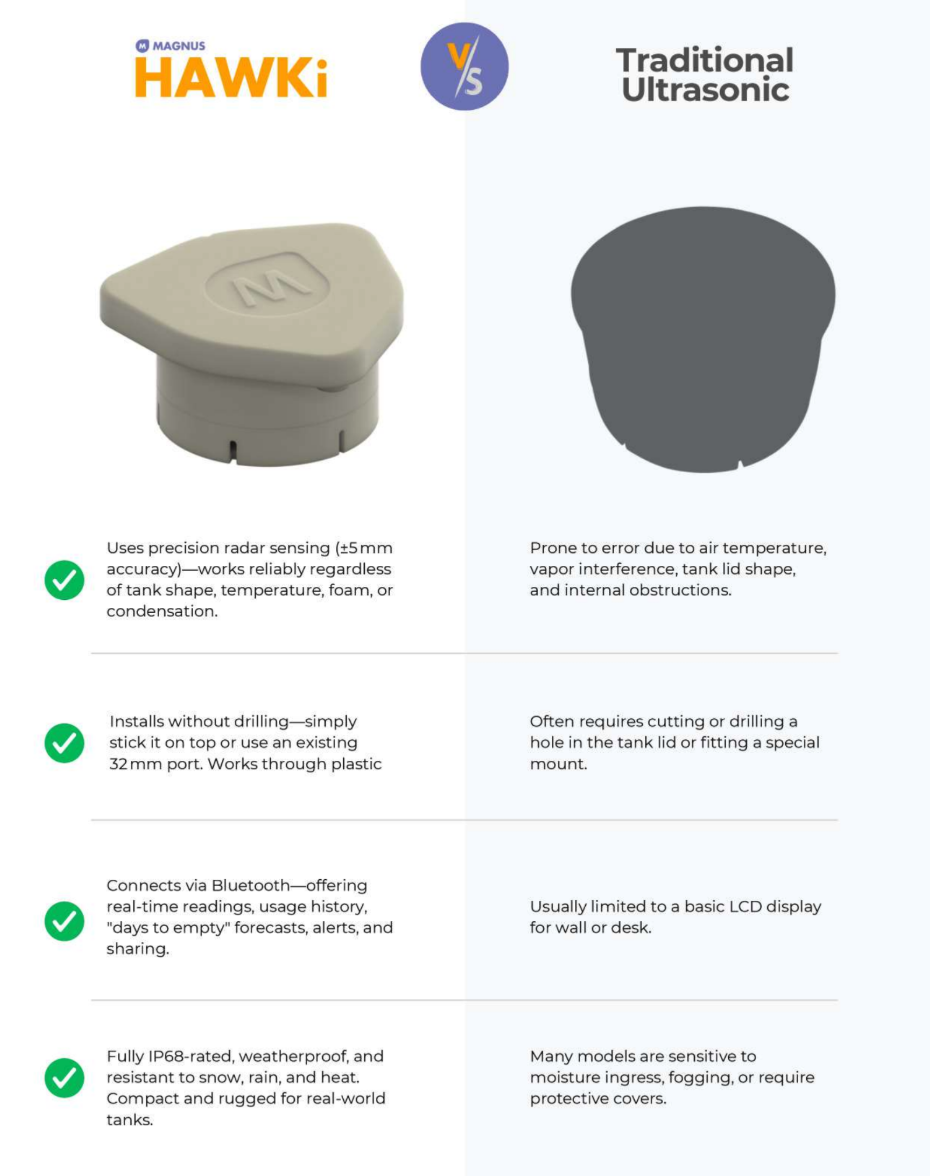
- HAWKi (Radar): Stable sensing across tank shapes and typical conditions like condensation or foam
- Ultrasonic: Can be more sensitive to air temperature, vapour interference, lid shape, and internal obstructions
- HAWKi (Smart monitor): App features include history, forecasting, alerts, and sharing
- Many ultrasonic gauges: Often limited to a basic LCD display for wall/desk
Browse all Oil Level Gauges View HAWKi Product Page
Why ultrasonic readings can vary more than expected
Ultrasonic gauges measure level by sending a sound pulse into the tank and timing the echo. This can work well in ideal conditions, but readings can be influenced by the environment in the air space above the oil. Temperature changes, vapour, lid shape, and internal obstructions can all affect the return signal.
This is one reason people who search for a “heating oil tank monitor” or “kerosene tank gauge” sometimes upgrade: they want a reading they can trust enough to use for planning and forecasting.
Why radar is often preferred for smart oil tank monitoring
Radar level sensing is widely used in level measurement because it tends to be less sensitive to air temperature and vapour, and can behave more consistently across different tanks. For a smart oil tank gauge, that stability matters: the more stable the level reading is, the more useful features like “days to empty” and usage history become.
Visual comparison: HAWKi (Radar) vs Traditional Ultrasonic Gauges
A simple way to choose
- If you want a basic local indicator and don’t need analytics, some ultrasonic gauges can be adequate.
- If you want a smart monitor that helps with planning (history, usage rate, days-to-empty, alerts), radar-based monitoring is often the better route.
Buy Magnus HAWKi
Choose the correct option for your tank type below. Both options are £114.98 inc VAT. The only difference is the fitting kit supplied for the tank type.