
Buying Guides
Ultra Compact Valves vs Standard OFVs
Why the Ultra Compact Isolation Valve Range Can Save You £100s in Future Oil Tank Repairs
The Ultra Compact range is designed around one simple but powerful idea: put the isolation point in the first fitting position at the tank outlet.
That small design change can make servicing safer, cut downtime and help avoid the expensive job of emptying a tank just to replace a faulty valve or fitting.
Safer maintenance access
Premium build quality
Lower long-term repair costs
Ultra Compact first-point isolation: the feature that changes the whole maintenance story
The Ultra Compact range is not just another filter valve option — it solves a genuine layout problem found in many standard heating oil tank setups.
The big difference is where the isolation point sits.
With Ultra Compact, the tank can be isolated at the first fitting position (the reducing nipple position), right at the outlet.
This improves safe isolation and helps make downstream servicing easier.
And it’s not just the isolation-point design that makes Ultra Compact stand out — the filter/valve assembly itself is a premium-quality product with higher-spec materials and build details.
Photo guide: Ultra Compact vs standard
What makes the Ultra Compact OFV better built?
Standard vs Ultra Compact summary
Products mentioned

Why it could save you £100s
The Ultra Compact range can cost more upfront than a standard arrangement, but that extra spend is often tiny compared with the cost of a difficult repair where the tank cannot be isolated at source.
If a component leaks, seizes or fails in the wrong place on a standard setup, the job can become more complex, take longer, and in some cases require the tank to be emptied before repair.
Where the extra cost can be recovered later
The Ultra Compact design can help reduce long-term cost exposure by improving safe isolation and service access:
Faster, safer isolation at source can reduce time spent making the system safe before work starts.
In many common maintenance/fault scenarios, first-point isolation can avoid the need for a drain-down.
Simpler maintenance can mean fewer delays, fewer callout complications and less disruption.
Photo guide: Ultra Compact setup vs standard setup (what actually changes)
The key practical difference is where the isolation point sits. Ultra Compact puts isolation into the first fitting position; standard layouts often begin with a plain reducing nipple and isolate further downstream.
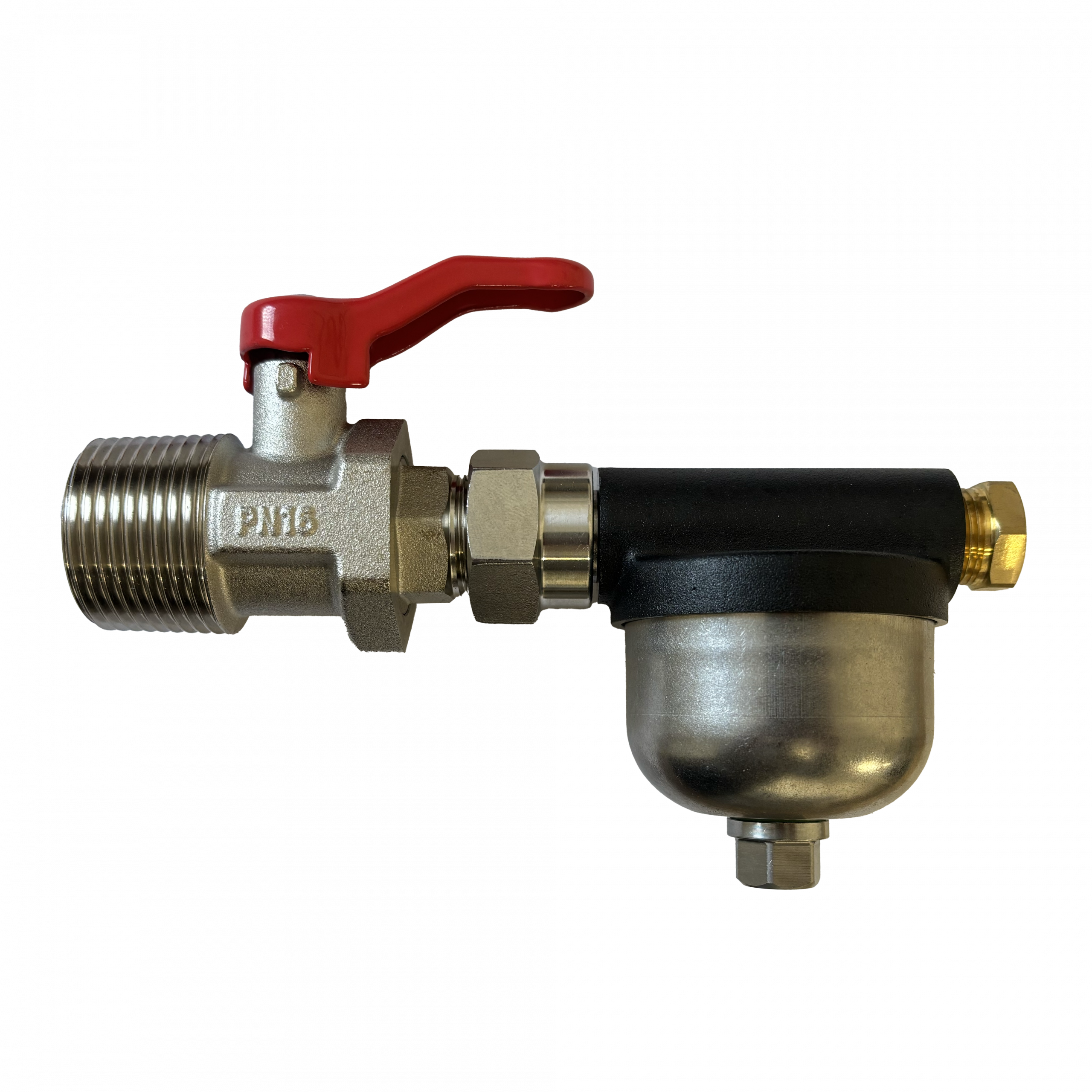
Ultra Compact setup (first-point isolation at the tank outlet)
The Ultra Compact range is designed so the isolation point is at the very start of the outlet assembly (the reducing nipple position), helping safer servicing and easier maintenance later.
Tank outlet → Ultra Compact isolation valve (first fitting) → filter / downstream components
Standard setup (plain first fitting + downstream isolation)
In many standard OFV-style layouts, the first fitting is a plain reducing nipple with no shut-off function, and the filter/valve assembly sits further downstream.
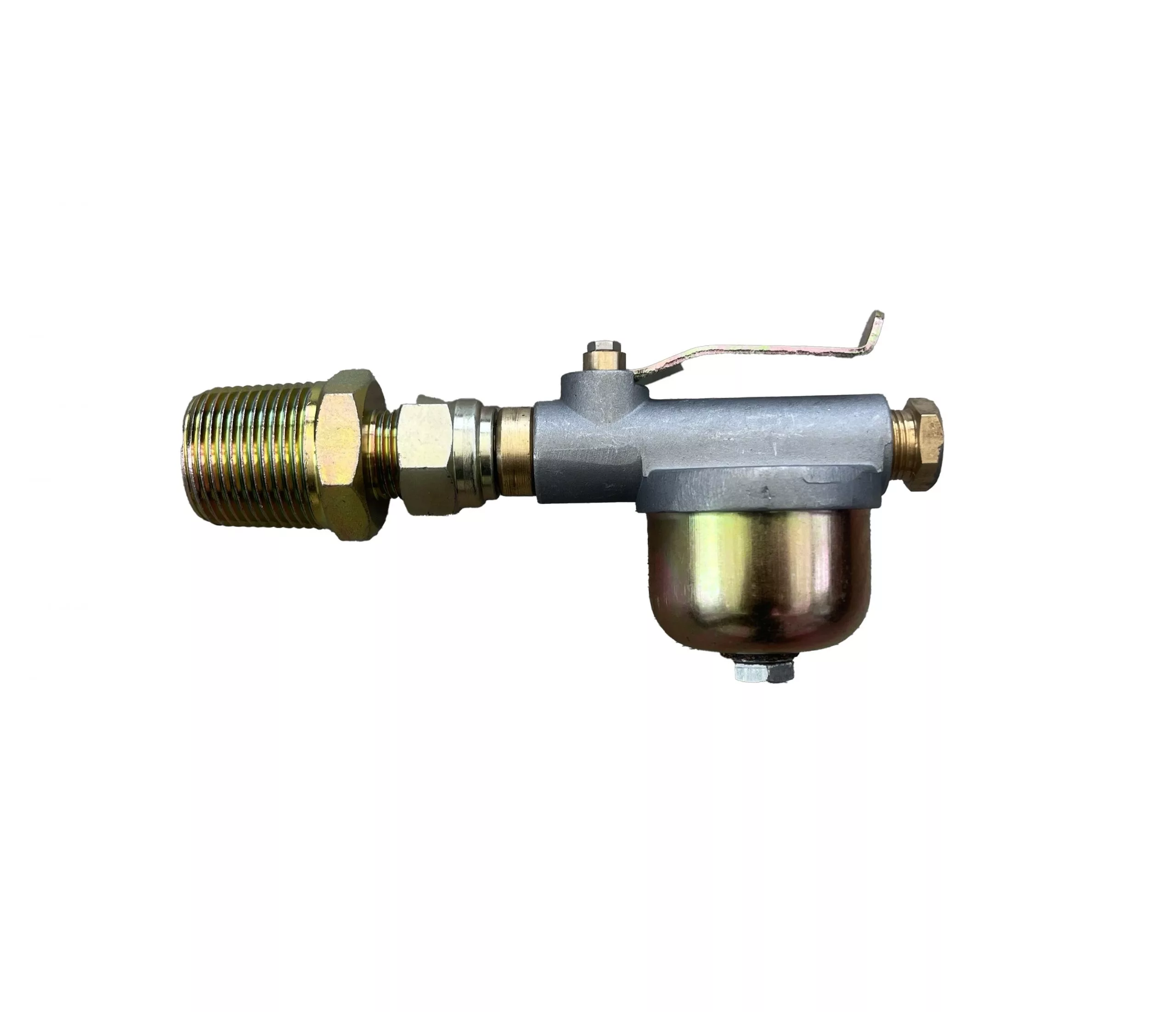

Tank outlet → Plain reducing nipple (no isolation) → filter/valve assembly (isolation downstream)
What about the actual filter/valve assembly itself? In one word: Quality.
The Ultra Compact advantage is not only about where the isolation point sits. The black Ultra Compact OFV/filter valve assembly is also a premium product in its own right, with material, sealing and construction details designed for durability and serviceability.
Ultra Compact black OFV/filter valve – key quality USPs
It’s not our job to rubbish the competition, but the Ultra Compact product stands out on build quality, materials and design details.
Material & finish USPs
- Aluminium filter body with black anodised corrosion-protective finish
-
All metal components (excluding the brass 3/8” BSP x 10mm compression nut, brass recessed handle washer and aluminium filter body)
made from 304 grade stainless steel - All seals in green Viton rubber
Design & serviceability USPs
- 1/2” BSP inlet swivel nut fitted using internal broach design (internal hex / Allen fixing) — not crimped
- O-ring seal on inner shank of the 1/2” BSP inlet assembly
- Choice of “Made in England” embossed filter bowl
- 50 micron nylon strainer
- Outlet options: 3/8” BSPP or 10mm compression
Standard OFV-style kits: where the difference is usually seen
Standard OFV-style filter valve kits are widely used and can be a perfectly valid budget-first option. The difference is usually not just price — it is the level of material specification and build detail.
Rather than criticising other products, the key point is this:
Ultra Compact is designed as a premium-quality solution — both in layout (first-point isolation) and in the filter/valve assembly construction itself.
Better isolation layout + higher-spec materials/components + long-term maintenance benefits
Why safe isolation matters in real-world maintenance
A heating oil setup is only truly “good” when it is safe to service and straightforward to maintain. The Ultra Compact range is designed for exactly that kind of long-term thinking.
- Safer isolation before maintenance or fault rectification
- Lower chance of complicated callouts caused by poor isolation layout
- Better future serviceability when compared with plain first-fitting arrangements
- A stronger upgrade path for existing systems using standard reducing nipples
Standard vs Ultra Compact summary (quick comparison)
| Comparison Area | Ultra Compact Range | Typical Standard OFV-Style Layout |
|---|---|---|
| Main design focus | Isolation at first fitting / tank outlet position | Lower upfront purchase cost |
| Source isolation | Yes (first fitting position) | Often downstream of first fitting |
| Filter/valve assembly quality focus | Premium materials, seals and engineered details | Varies by product and price point |
| Long-term serviceability | Stronger | More limited in some fault scenarios |
| Risk of tank emptying during some repairs | Reduced | Higher if fault is before usable isolation point |
| Best value comparison method | Total cost over time | Initial purchase price only |
Extra value with bunded tank purchases
The Ultra Compact Valve and Filter is also a very strong value option because it comes free with the majority of bunded oil tank purchases.
If the tank is eligible, it can be selected for free on selected product pages.
Shop the Ultra Compact Range (and Compare the Standard Setup)
Buying section at the bottom to keep the page blog-first. The featured Ultra Compact Valve and Filter includes a direct buy button (£33.32 Excluding VAT).
Ultra Compact Valve and Filter – Heating Oil Tank Filter Valve
Premium build quality
Long-term cost saver
Complete Ultra Compact filter valve kit designed to place the isolation point in the first fitting position at the tank outlet, improving safe isolation and future serviceability.
Also worth knowing: this comes free with the majority of bunded oil tank purchases. If eligible, it can be selected for free on selected product pages.
Ultra Compact Oil Tank Isolation Valve (reducing nipple replacement)
Moves isolation to source
Retrofit-friendly
A standalone Ultra Compact valve that replaces a plain reducing nipple/adaptor and upgrades the layout by moving the isolation point to the first fitting position.
Regular OFV Full Kit (standard filter valve arrangement)
Common setup
Comparison only
Standard OFV-style filter valve kit typically using a plain first fitting with the isolation/filter assembly downstream — useful for comparison against the Ultra Compact layout and quality story.
Regular Reducing Nipple (no isolation point)
Basic adaptor only
Comparison only
Plain reducing nipple with no built-in isolation point. This is the part the Ultra Compact standalone valve improves on by adding source isolation at the first fitting position.
Installation and servicing should always be carried out safely and in line with current regulations and manufacturer guidance.
